Athenry passive house
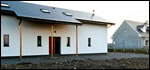
Staggeringly airtight ecological home in Athenry set to meet the Passive House Institute standard

Staggeringly airtight ecological home in Athenry set to meet the Passive House Institute standard
Passive houses have long been considered the ultimate in low energy buildings. So when it comes to BERs, why don’t they always get a straight A? Lenny Antonelli investigates.
The Passive House standard, an internationally renowned approach to building that negates the need for conventional heating, has attracted considerable interest in Ireland recently as energy prices continue to rise. Vivienne Brophy, Dr Irena Kondratenko, Patxi Hernandez and Kevin Burke of UCD’s Energy Research Group look at the effect this approach could have on cutting Ireland’s energy consumption and CO2 emissions.
For a building to truly be considered a passive house a vast range of criteria need to be met, as Niels Bjergstrom, founder of Zero-Carbon Solutions Ltd reveals.
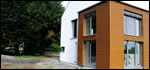
Located in Oldtown, a hard to find country town in County Dublin, is a stunning new one-off house that not only manages to bring open-plan living to rural life, but also meets the onerous passive house standards using low impact materials. Jason Walsh visited the site as the house neared completion to find out more, an opportunity that Construct Ireland couldn’t pass up
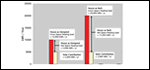
Few concepts in sustainable design have caught on like the passive house. Since the construction of the first passive house in Germany in 1990, an estimated 15 to 20,000 houses have been built to what is arguably the world’s leading low energy building standard. Drawing from his experience in sustainable building since the early 1980s, Bill Quigley of NuTech Renewables posits an alternative approach.
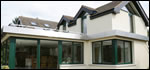
Randy Ralston and Mel Cronin aimed for the passive house standard with their upgrade, and though they didn’t quite get there they ended up with a house that produces more energy than it consumes, making it one of the country’s flagship green renovation projects.
The winner of the sustainability award at the 2011 Irish Architecture awards, Roebuck Castle student residence at UCD’s Belfield campus is also the biggest certified passive house project built to date in Ireland and the UK. Tony Rigg of Kavanagh Tuite Architects explains how such a significant building achieved passive results.
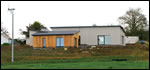
As interest in sustainable building continues to escalate, Construct Ireland is increasingly unearthing buildings that betray an ambition to break new ground under a plethora of green criteria. John Hearne visited one such house in County Louth, and found a project driven by passive house and BER scale-topping ambitions combined with on-site energy and water supply strategies and a commitment to the use of green materials
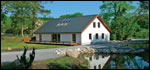
Imagine moving into a house without a heating system – what would you do? Contact the developer and demand they put one in immediately? Call a solicitor and sue the builder? Or sit back and enjoy living in a house, designed to meet your expectations of comfort without any recourse to a space heating system. Jason Walsh met the people behind Ireland’s drive toward the passive house.
Unipipe are specialist distributors of heat pumps, underfloor heating and renewable low-energy heating systems.