Passive house or equivalent - The meaning behind a ground-breaking policy
Dún Laoghaire-Rathdown’s passive house policy also leaves the door open for alternative approaches, provided their equivalence can be demonstrated. But what does this mean?

Dún Laoghaire-Rathdown’s passive house policy also leaves the door open for alternative approaches, provided their equivalence can be demonstrated. But what does this mean?
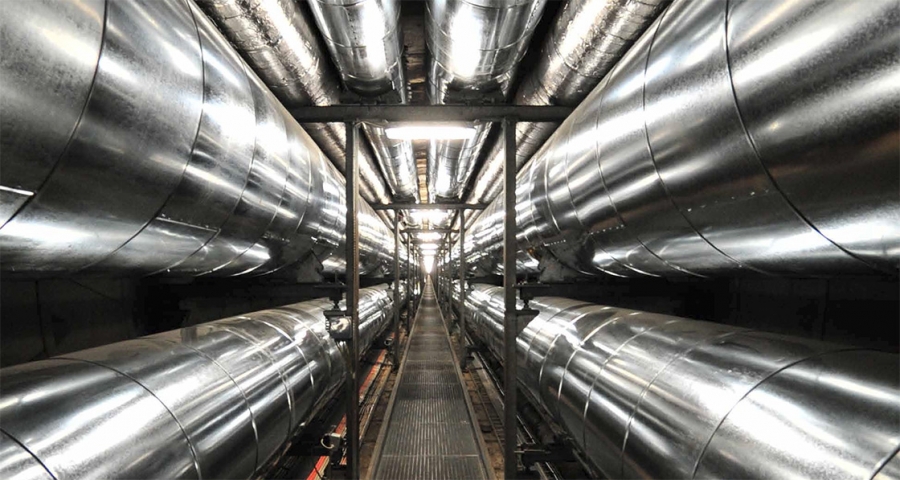
Thanks to fabric-first energy performance approaches such as passive house, heating demand is collapsing. So how does district heating stack up in buildings which need such little heat?
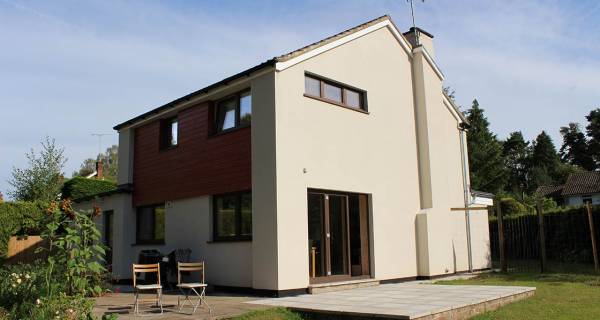
A deep retrofit of this 1960s block-built home turned it into a modern ultra low-energy home that emphasises wood, light and natural materials.
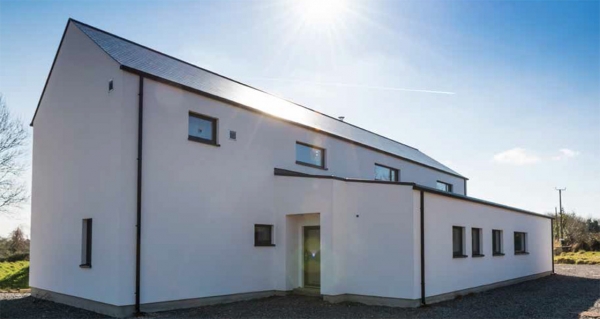
The abandoned husk of a 1960s school building sounds a very long way from a comfortable, ultra low energy family home. Thanks to a remarkable upgrade effort – influenced by reading Passive House Plus – one Fermanagh family are reaping the rewards of one such transformation.
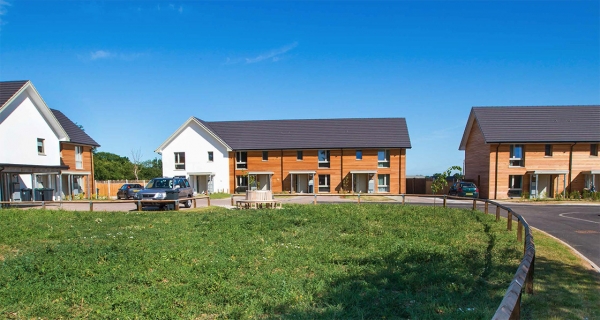
With a number of trailblazing housing associations and councils building social and affordable housing schemes repeatedly to passive standards, the notion that the world’s leading low energy building standard is the preserve of the well-off doesn’t stand up to scrutiny, as Hastoe’s latest Essex passive house scheme demonstrates.
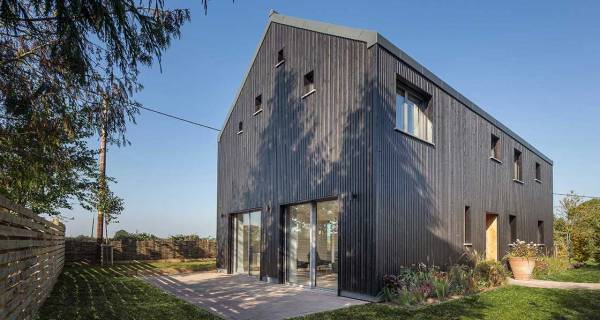
This new timber frame home in the south of England met the passive house standard despite a less-than-optimum orientation, launched a brand new design-and-build venture between its architect and project manager, and embraced a subtle-yet-elegant design that maintains a simple passive house form while drawing inspiration from the local vernacular.
This brand new light-filled passive house set in the countryside of north Kildare was inspired by local farm buildings, and features a striking and exposed oak-framed structure.
It may sound too good to be true, but a new scheme of semi-Ds in Co Wexford proves that passive houses can be remarkably affordable to buy – and that’s with net zero heating and hot water costs, and the soundproofing levels of a cinema.
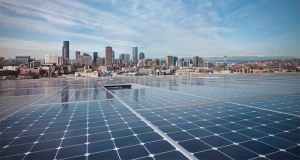
The Living Building Challenge is arguably the world’s toughest environmental building certification program. In order to achieve the award, buildings must meet rigorous standards in seven different performance categories, also known as ‘petals’: place, water, energy, health and happiness, materials, equity and beauty. Our selection includes three American buildings that have been certified to one of these standards.
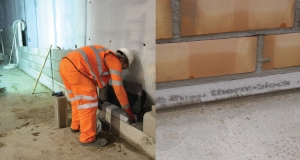
The refurbishment of a landmark listed property on London’s Leicester Square has seen Marmox Thermoblocks specified in very large quantities for an unusual application. Number 48 Leicester Square is being completely redeveloped behind the retained 1920s stone facade, with Make Architects leading the design team on behalf of client, Linseed Assets, while Pacific Construction is the main contractor.
Roughly 50,000 excess winter deaths occur annually between the UK and Ireland, with fuel poverty a primary cause. Yet although concerted social housing retrofit efforts could help tackle climate change while preventing thousands of senseless deaths of vulnerable people, flawed financial modelling is letting us down, argues Peter Rickaby.

Passive house indeed works everywhere was the core message at the second annual South Pacific Passive House Conference, writes Andrew Michler. The conference was held in Melbourne on 12-13 February. While just a handful of passive houses have been completed in Australia so far, a sizable contingent from New Zealand came to the conference armed with multiple examples of how even warm climate buildings benefit from the energy savings, comfort and critically the health of a passive house. With a major spike in asthma from damp and mouldy homes, the principles such as airtightness, controlled air exchange, and thermal bridge free design are finally being accepted as the best solution in this part of the world.
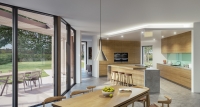
Casa Architects has achieved NPPF 55 statusfor the development of a new passive housein a listed parkland near Frome, Somerset.NPPF 55, recognised as one of the mostdifficult planning applications to achieve, setsstrict planning restrictions to allow only trulyoutstanding or innovative architecture of thevery highest quality and standard to be built in the English countryside.
Two leading Irish manufacturers of passive house components have both received passive house certification for their systems.