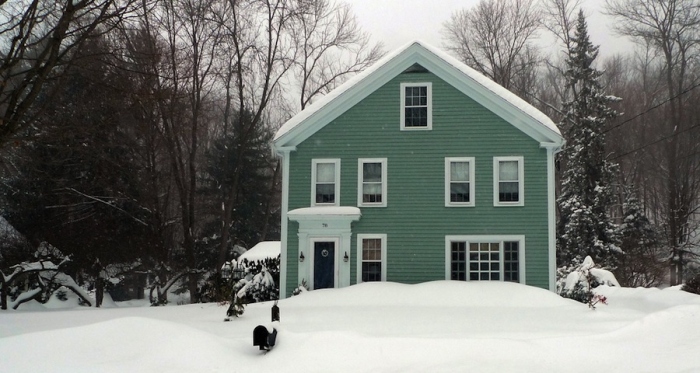
Passive House Institute certifies new components for cold climates
The Passive House Institute has certified two new windows and a new skylight as suitable for use in passive house buildings in cold climates.

The Passive House Institute has certified two new windows and a new skylight as suitable for use in passive house buildings in cold climates.
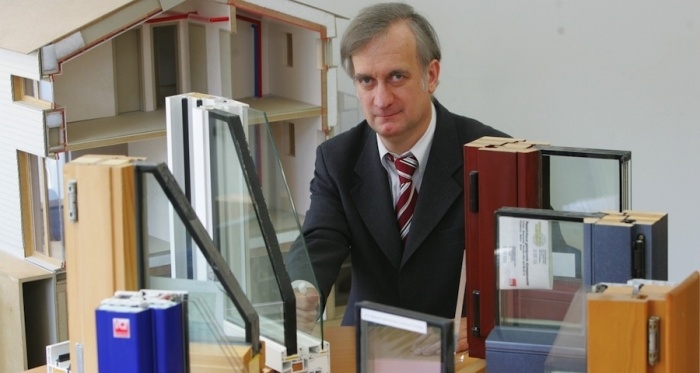
Wolfgang Feist, one of the creators of the passive house concept and a founder and director of the Passive House Institute, will speak in Dublin on 25 October at the 2013 See The Light conference.
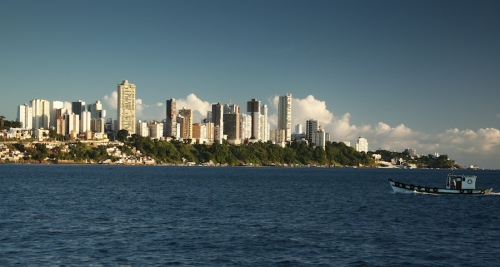
The Passive House Institute has published a new study that looks at designing passive buildings for tropical climates. The study concludes that the key design criteria for such buildings include,"a very airtight building envelope, 10 to 15 cm of insulation, solar control glazing, fixed external shades for the windows and ventilation with both heat and energy recovery".
The new version of the passive house planning software is now available.
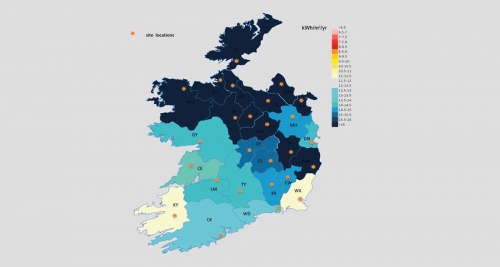
The coming decades are expected to bring higher average temperatures, more extreme weather events – and possibly more cold snaps. But how are passive house buildings geared to adapt to a changing climate?
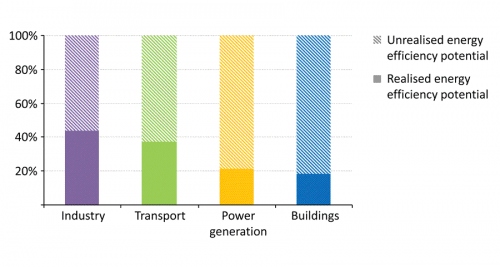
Progress on retrofitting Europe's building stock is sluggish, but there is a way out of the mire.
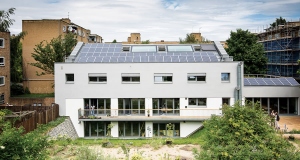
A community centre in a deprived area of north London has become one of the few buildings in the UK & Ireland to get passive house certification with a renovation.
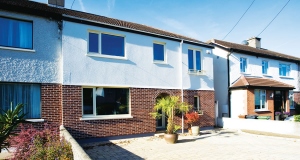
A house in south Dublin recently became the first Irish building to become EnerPHit certified. Architect Joseph Little describes the challenges of meeting the Passive House Institute’s standard for upgrading existing buildings.
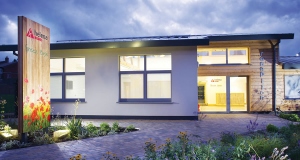
One of the UK’s first nondomestic buildings to gain passive house certification, the Simmonds Mills designed Green Base centre is an embodiment of the environmental ethos it seeks to promote.
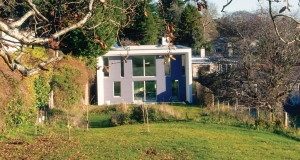
With a target as exacting as the passive house standard, circumstances can conspire against meeting every criteria. Architect Sam Mays describes a Co Wicklow home that hit every passive target except one when the builder went bust.
A stunning location, thoughtful design and a certified passive house: a new home in the wooded hills of the Scottish Borders manages to have its cake and eat it too.
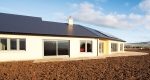
A new house in Wexford is the first in the country to achieve an A1 Building Energy Rating and certified passive house status – arguably making it the most energy efficient building yet built in Ireland. So why did a regulatory flaw risk rendering it non-compliant?

Nothing drives innovation like adversity. Facing up to the prospect of scarce energy and other resources, we can take inspiration equally from the Inuit and the most avant-garde of passive house designers, as Sofie Pelsmakers reveals in her choice of six uniquely inspiring buildings from around the world.

Architect Michael Green says that by building timber skyscrapers, we can meet global housing demand without increasing carbon emissions. Check out his TED talk below.