
person_outline

Lenny Antonelli is deputy editor of Passive House Plus. He also writes regularly for the Irish Times, and has contributed to a variety of other publications including the Sunday Times, the CS Monitor, Village, the Sunday Tribune amd the Dubliner. He is currently working on a radio documentary on Ireland's oceans.
Website URL: http://lennyantonelli.ie/
Tuesday, 17 May 2011 01:00
Will Better Energy really create 2,000 extra jobs?
Last week, we raised some questions about the accuracy of the government's claims that its new Better Energy building upgrade programme represents an additional €30m investment over what was initially promised for 2011.
The other big claim the government made was the €30m figure would create an extra 2,000 jobs this year. Of course, if the €30m is not actually new funding, but just a re-allocation from a tax relief on energy efficiency works that appears to have been scrapped, the 2,000 figure looks highly questionable. Is the department claiming that putting €30m into Better Energy is creating 2,000 more jobs than would have been created by the tax relief?
The government says its €30m investment will be matched by €30m of private sector investment. So that's €60m altogether. So is it simply presuming this will yield 2,000 jobs with an average wage of €30,000, or is its calculation — as one would hope — more sophisticated?
Also, has it considered the potential for job losses in the heat pump and biomass boiler sectors due to the withdrawal of grants from those industries? We're already hearing about companies coming under serious pressure due to the removal of grants. Of course from the government's point of view, the purpose of grants is to stimulate a market to a point where it's healthy and there's a good range of choice for consumers. It clearly thinks the heat pump and biomass boiler sectors are now there, making it the right time to remove the grants.
But what kind of message does it send to eliminate grants for heat pumps and biomass boilers while maintaining support for oil and gas boilers?
We've put questions on all of the above to the Department of Communications, Energy and Natural Resources and are hoping to have a response in the next few days.
The other big claim the government made was the €30m figure would create an extra 2,000 jobs this year. Of course, if the €30m is not actually new funding, but just a re-allocation from a tax relief on energy efficiency works that appears to have been scrapped, the 2,000 figure looks highly questionable. Is the department claiming that putting €30m into Better Energy is creating 2,000 more jobs than would have been created by the tax relief?
The government says its €30m investment will be matched by €30m of private sector investment. So that's €60m altogether. So is it simply presuming this will yield 2,000 jobs with an average wage of €30,000, or is its calculation — as one would hope — more sophisticated?
Also, has it considered the potential for job losses in the heat pump and biomass boiler sectors due to the withdrawal of grants from those industries? We're already hearing about companies coming under serious pressure due to the removal of grants. Of course from the government's point of view, the purpose of grants is to stimulate a market to a point where it's healthy and there's a good range of choice for consumers. It clearly thinks the heat pump and biomass boiler sectors are now there, making it the right time to remove the grants.
But what kind of message does it send to eliminate grants for heat pumps and biomass boilers while maintaining support for oil and gas boilers?
We've put questions on all of the above to the Department of Communications, Energy and Natural Resources and are hoping to have a response in the next few days.
Published in
Blogs
Tagged under
Friday, 13 May 2011 01:00
Better Energy is the new funding just a sleight of hand?
Launching its Better Energy building upgrade programme earlier this week, the Department of Communications, Energy & Natural Resources said it had committed "an additional €30m towards the programme" for 2011. It added that "capital funding of €60m was allocated for energy efficiency initiatives in Budget 2011". So reading the press pack, you get the impression the previous government allocated €60m, and the current one is now adding €30m to that.
But is this really the case?
As part of his last budget, former finance minister Brian Lenihan introduced a tax credit scheme — under this, homeowners could claim a tax credit on home energy efficiency works. Lenihan set aside €30m for the scheme for 2011.
But there was no mention of the tax credits as part of the launch of Better Energy, and the scheme does not appear to be open or imminent. Has it been dropped, and if so can the government claim the €30m of additional funding it announced on Wednesday is extra?
What's more, while the Better Energy press pack says "capital funding of €60m was allocated for energy efficiency initiatives in Budget 2011", the figure in the budget actually appears to be €69m. The €60m figure may be a typo, but if not it means that a total of €99m originally set aside for this year has now become €90m.
We hope to have a reply from the department to clarify things shortly.
Published in
Blogs
Tagged under
Friday, 13 May 2011 01:00
High oil prices dampens economic recovery is peak coal here? NY passive house project
Here's our usual round up of links that might interest you:
It seems high oil prices are strangling global economy recovery. According to the FT: "Four months after the OECD warned that soaring oil prices could damage the economic recovery...that IEA has noticed that global oil demand has begun to flatten." Financial Times. This is a point we've been making as part of our Energise Ireland campaign — it's one reason we urgently need to wean Ireland off imported oil. If you agree, please sign the petition at the Energise Ireland website.
Renewable energy can power the world, says the UN Guardian
Does preserving historic buildings save energy or not? Green Building Advisor
Profile of a passive hour project in New York Green Building Advisor
Have we reached peak coal? Energy Bulletin
Profile of a Spanish "grow home", designed to be "expanded and changed to fit the space needs and budget of its owners". Treehugger
The case for government investment in public transport — this argument applies to the US, but it makes sense for Ireland too The Infrastructurist
Biomass electricity production: how green is it? Green Building Advisor
Published in
Blogs
Tagged under
Monday, 09 May 2011 13:48
Heavy electricity

SEAI recently proposed a series of changes to Deap — the software tool used to calculate BERs — including a reduction in its primary energy factor. But while this will benefit electrically-powered heating devices, some in the industry still feel systems such as heat pumps are disadvantaged by Deap and the BER system
Published in
Policy
Tagged under
Monday, 09 May 2011 13:41
Stillorgan upgrade

An energy conscious renovation and extension in south Dublin breathes new life into a typical semi detached home — the house is now wrapped with external insulation and boasts breathable and ecological materials too.
Published in
Retrofit
Tagged under
Monday, 09 May 2011 13:39
A-rated Cork eco home
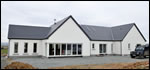
After a long struggle to build their home, Karen and Steve Ward finally got their wish — an energy efficient, timber frame house that boasts a palette of healthy and ecological materials and a fully renewable heating system.
Published in
Timber
Tagged under
Monday, 09 May 2011 13:35
Living without heating
The advent of central heating improved the comfort of life for countless Irish people over the past century, but as energy efficient building grows, some pioneering homeowners think they can live without it. What’s life like for them?
Published in
Insulation
Tagged under
Friday, 06 May 2011 01:00
It's time to Energise Ireland: our campaign for a green economic and energy revolution
Hey everyone, we've just launched our Energise Ireland campaign for a green energy and economic revolution in Ireland. We need all the support we can get for what we believe is a vital campaign — you can read the manifesto and sign the petition at the campaign website, and follow us on Twitter too.
Energise Ireland has five key aims, all of which we believe are crucial to developing a sustainable, thriving economy in Ireland.
1. Become oil free & no longer a net energy importer by 2025. If we don't do this, the rising cost of importing oil will stifle our economic recovery.
2. Develop green bonds to offer Irish citizens a safe, patriotic investment in sustainable energy projects.
3. Upgrade the entire building stock to net zero carbon by 2020, by retrofitting buildings and switching to renewable heat and electricity.
4. End fuel poverty by 2015 to protect the health of the most vulnerable in society while reducing cost to the taxpayer.
5. Implement world leading green public procurement requirements, giving Irish suppliers an innovation edge for export.
For anyone uncertain, here's a reminder of why it's crucial for us to wean off oil as soon as possible.
Let us know what you think about the campaign — email us at info [at] energiseireland.ie, or comment below. And if you like it, please sign the petition.
Published in
Blogs
Tagged under
Thursday, 28 April 2011 01:00
Oil price to stifle recovery world's first zero carbon city Victorian passive house
Here's a few interesting links for your perusal. Apologies for the lack of updates recently, producing the new issue of the mag was a bit of a marathon, but we hope it was worth it. Normal service on the website should resume now.
International Energy Agency chief economist Fatih Birol has warned that the price of oil could stifle global economic recovery over the next few years — a point we at Construct Ireland have made repeatedly in an Irish context, just as we're about to launch our Energise Ireland campaign to make Ireland oil free by 2025. In this radio programme, Birol warns that, "higher oil prices means putting pressure on the trade balance and through that economic recovery efforts can be well strangled." ABC Radio
A new way to duct HRVs: should they be pulling stale air from bedrooms rather than 'wet' rooms? Green Building Advisor
A Victorian home in the UK meets the passive house standard Green Building Advisor
New study finds solar panels are contagious Good.is
A profile of Masdar, the world's first "zero carbon city" Guardian (with pictures here)
Average Irish house prices could still be overvalued by up to 30% Irish Times
What will be the fate of architectural heritage in the Nama portfolio? Ireland after Nama
Natural gas: not as clean as we thought? Infrastructurist
Published in
Blogs
Tagged under
Wednesday, 27 April 2011 01:00
Easca and Green Works present green building forum
Easca and Green Works will host a green building forum on 6 May in Dublin. The theme of the event will be the question of how to create a fully sustainable built environment by 2030 in Ireland.
Leading national and international speakers will be presenting, including Pooran Desai, co-founder of green entrepreneurial charity Bioregional and Noel Morrin of multinational construction firm Skanska. Kelly Grainger of Interface will talk about "closed loop production", and architect Tom Wooley will discuss opportunities for Ireland to develop natural construction materials. Mike Haslam from leading green architects Solearth and sustainable design consultant Jay Stuart of DWEcoCo will also speak.
The forum will also include seminars on various building rating methods, such as Leed, Breeam, Spear and the Living Building Challenge. A discussion on which of these tools Ireland should adopt will follow. There will also be a workshop on how Ireland can "create sustainable communities from the detritus of the boom". This will examine the role of unemployed architects and urban designers in rejuvenating the city of Barcelona, and it will also look at opportunities for Nama to help create the sustainable communities.
This forum is free for jobseekers who register with Green Works, otherwise the price is €50. There is a concession rate of €30 for members of Easca, the RIAI, Engineers Ireland, the Society of Chartered Surveyors, the Irish Property and Facility Management Association, the Irish Planning Institute, and attendees of Easca's Green Building Users Group.
Published in
Blogs
Tagged under
Page 24 of 47