Down wetlands centre
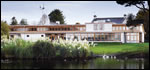
Eco architects Solearth expand their highly impressive portfolio with deep green design at Castle Espie Wetlands and Wildfowl centre


Conventional wisdom dictates that higher construction costs — for instance to reduce energy consumption and carbon emissions — would either squeeze developers’ profit margins or increase house prices. Tom Dunne, Head of DIT’s School of Real Estate and Construction Economics, reveals how misguided this view could be...
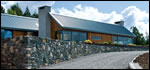
Few words in the vocabulary of Ireland’s built environment come with more baggage than ‘bungalow’. For many people, it embodies a total disregard for good architecture and the environment, in part due to its association with isolated one-off housing. John Hearne visited a house in Mayo that mixes considered design with a host of modern technologies to breathe new life into the form.

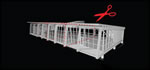
The environmental impact of the built environment extends far beyond energy consumption and carbon emissions throughout a building’s intended lifespan. Architect and sustainable design consultant Sinéad Cullen of DW EcoCo & BE Architecture explains why there’s a need to design buildings that can be deconstructed rather than destroyed once they reach their end of life, and looks at the obstacles to be overcome to make this happen.

Brian Homan, Joint Managing Director of leading consulting engineers Homan O’Brien Associates describes a nursing home currently being built that is adopting a sustainable building approach to deliver healthy, comfortable accommodation at low running costs.

If the Irish construction industry is truly to rapidly embrace the concept of sustainability, leadership from the public sector will be paramount in setting the right example. John Hearne spoke to the design team of the Opus and RIBA award-winning Cork Civic Offices, a development which keeps carbon emissions and fossil energy consumption to a minimum, and once more puts the public sector at the forefront of innovative sustainable design