Passive dynamics
For a building to truly be considered a passive house a vast range of criteria need to be met, as Niels Bjergstrom, founder of Zero-Carbon Solutions Ltd reveals.

For a building to truly be considered a passive house a vast range of criteria need to be met, as Niels Bjergstrom, founder of Zero-Carbon Solutions Ltd reveals.
When residents of Hollywood solemnly and publicly state the need to combat climate change, it is easy to reject as self-righteous, opportunistic bleating. When it’s a resident of Hollywood, County Wicklow, and the environmental statement is in the form of a poroton-block house infused with sustainable features, it provokes an altogether different response, as Lenny Antonelli reveals.
The winner of the sustainability award at the 2011 Irish Architecture awards, Roebuck Castle student residence at UCD’s Belfield campus is also the biggest certified passive house project built to date in Ireland and the UK. Tony Rigg of Kavanagh Tuite Architects explains how such a significant building achieved passive results.
As interest in sustainable building continues to escalate, Construct Ireland is increasingly unearthing buildings that betray an ambition to break new ground under a plethora of green criteria. John Hearne visited one such house in County Louth, and found a project driven by passive house and BER scale-topping ambitions combined with on-site energy and water supply strategies and a commitment to the use of green materials
Beauty is only skin deep, or so goes the cliché, but is there more to 'grace' in a building than its exterior? Jason Walsh visited Rathnew, County Wicklow, to see how an ordinary office building was being transformed into a paragon of sustainability and spoke to two of the building's designers and occupants, architect Tomás Ó Leary and engineer Mark O'Brien
Sustainable architect Simon McGuinness describes a project in Dublin which is set to surpass the onerous standard using structural insulated panels.
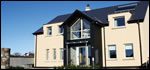
A new development at Grange Lough, Rosslare, reveals that passive houses can be made Irish – both in terms of what they’re built with, and how they look.
It could be a reflex response to the shockingly poor construction standards that came to define Ireland’s boom years, but the world’s leading low energy building standard is starting to thrive in Ireland. As the several case studies following this article reveal, a groundswell of Irish clients, designers, contractors and manufacturers are starting to recognise the opportunities available in becoming early adopters of a standard destined for exponential global growth.

Can a supermarket be green? Tesco's new store in Tramore, County Waterford suggests that, at least in terms of the building it’s housed in, the sky’s the limit. Jason Walsh visited a building which meets passive house standards and demonstrates impressive attention to sustainability throughout its design.
While the principles of low energy building apply equally for new build and upgrades, the reality is that htting passive levels becomes much trickier when retrofitting. The Passive House Institute have taken this on board and created a retrofit standard that is ambitious but achievable.
Unipipe are specialist distributors of heat pumps, underfloor heating and renewable low-energy heating systems.