EPA HQ
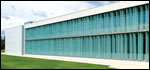
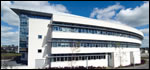
A new extension to the EPA's headquarters in Wexford lives up to the organisation's aim of environmental protection, boasting passive ventilation and lighting, a host of green technologies and a sustainable approach to landscaping.

Welcome to the archive of Construct Ireland, the award-winning Irish green building magazine which spawned Passive House Plus.
The feature articles in these archives span from 2003 to 2011, including case studies on hundreds of Irish sustainable buildings and dozens of investigative pieces on everything from green design and building methods, to the economic arguments for low energy construction.
While these articles appeared in an Irish publication, the vast majority of the content is relevant to our new audience in the UK and further afield. That said, readers from some regions should take care when reading some of the design advice - lots of south facing glazing in New Zealand may not be the wisest choice, for instance.
Dip in, and enjoy!
A new extension to the EPA's headquarters in Wexford lives up to the organisation's aim of environmental protection, boasting passive ventilation and lighting, a host of green technologies and a sustainable approach to landscaping.


The need to reduce CO2 emissions and energy consumption from buildings has never been more immediate. There is a growing consensus that we must reduce our dependence on rapidly depleting, carbon intensive fossil fuels, which, amongst other things, will involve overhauling how buildings are designed, constructed and used.

Patrick Daly, co-founder of the RiSE (Research in Sustainable Environments) research unit in the DIT has undertaken an in depth study and critique of the current Irish Part L for energy efficiency in dwellings, comparing it in detail to the UK equivalent. The findings raise challenging questions about the Irish standards and methodology and highlight serious shortcomings in comparison to our UK neighbours, permitting substantially higher levels of CO2 emissions from new homes in Ireland than in the UK.
An ambitious new community initiative aims to run Clonakilty on 100% renewable energy — and with similar projects sprouting up across Ireland and Europe, it offers one local example of how our Energise Ireland campaign can achieve its primary goal: weaning Ireland off fossil fuels and on to green energy.
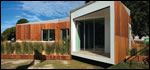
Lenny Antonelli takes a look at some of the entrants of the 2009 Solar Decathlon, a competition that challenges university teams from around the world to design and build homes that capture the sun’s energy.
As policy makers start to set mandatory low energy and renewable energy requirements as conditions of planning, the ability of the construction industry to find sound low-cost ways of achieving the new standards is becoming a key factor. John Corless speaks to leading sustainable building consultant Jay Stuart of Delap & Waller EcoCo and Paul Gilmartin of Ecobead to discover an approach with enormous potential for en-masse usage.
As Ireland struggles to meet its commitments to reducing CO2 emissions in accordance with the Kyoto Protocol, the renewable energy sector continues to flourish as wind farms rapidly develop and solar energy becomes increasingly viable
The emergence of climate change as a serious concern has helped create a burgeoning market for a vast range of eco technologies. All too often, however, the basic principles of sustainable design are ignored or misunderstood. Chris Croly of mechanical and electrical engineers Building Design Partnership describes the detail of a building which reveals a no-nonsense attention to sustainability.