Why Knott?
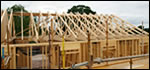
Lorna Kelly, of the Irish Timber Frame Manafacturers Association, takes a look at IrishTimber Frame

Welcome to the archive of Construct Ireland, the award-winning Irish green building magazine which spawned Passive House Plus.
The feature articles in these archives span from 2003 to 2011, including case studies on hundreds of Irish sustainable buildings and dozens of investigative pieces on everything from green design and building methods, to the economic arguments for low energy construction.
While these articles appeared in an Irish publication, the vast majority of the content is relevant to our new audience in the UK and further afield. That said, readers from some regions should take care when reading some of the design advice - lots of south facing glazing in New Zealand may not be the wisest choice, for instance.
Dip in, and enjoy!
Lorna Kelly, of the Irish Timber Frame Manafacturers Association, takes a look at IrishTimber Frame

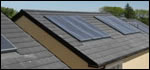
The rapidly growing public interest in sustainable building is finally starting to impact on property developers. Bill Quigley of Nutech Consultants describes an innovative 200 house development currently on site in Co. Cork where forward-thinking developers J & W Leahy Brothers have decided that the market is ready for low energy, low CO2 buildings.
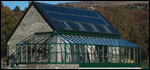
Ernst Posthuma of Solarcon sheds light on a demonstration project in west Cork that combines passive and active solar gains to remarkable effect.
A sustainable building must address more than energy, carbon or materials, argues Irish born architect Stephen Roe of up-and-coming London architects Roewu – it must respond to its environment. Not only does Roe’s design for the All Weather House achieve that, it boasts green materials, renewable heating and generous insulation too.

A framework for strategic sustainability is essential if we’re serious about greening the Irish built environment.
According to green architect Pat Barry, we should look no further than The Natural Step.
In a comparatively short time, district heating and cooling have emerged as an ideal sustainable solution for mixed use, residential, commercial and industrial developments. Far from being a new technology, district heating systems have been commonplace across Europe since the 1960s. Noel Walshe BE of district heating specialists Noel Walshe ltd explains what is required to deliver the most effective solution.

The development of sustainable building in Ireland has had to wait for the public to become concerned about energy supply, climate change, and the implications of living in draughty, damp buildings. Much of the established low energy know-how emanates from countries where cold winters drove innovation. Drawing from 50 years of research and development between the Canadian government and housing industry, the Super E programme may be just what Ireland needs, as John Hearne discovered at a new development in Rosslare.