Warning
  • JUser: :_load: Unable to load user with ID: 222

From the Construct Ireland archives


Welcome to the archive of Construct Ireland, the award-winning Irish green building magazine which spawned Passive House Plus. The feature articles in these archives span from 2003 to 2011, including case studies on hundreds of Irish sustainable buildings and dozens of investigative pieces on everything from green design and building methods, to the economic arguments for low energy construction. While these articles appeared in an Irish publication, the vast majority of the content is relevant to our new audience in the UK and further afield. That said, readers from some regions should take care when reading some of the design advice - lots of south facing glazing in New Zealand may not be the wisest choice, for instance. Dip in, and enjoy!

Passive Potential

0302-passivepotentialtitle.jpg
The Passive House standard, an internationally renowned approach to building that negates the need for conventional heating, has attracted considerable interest in Ireland recently as energy prices continue to rise. Vivienne Brophy, Dr Irena Kondratenko, Patxi Hernandez and Kevin Burke of UCD’s Energy Research Group look at the effect this approach could have on cutting Ireland’s energy consumption and CO2 emissions.
Dundalk green housing

Dundalk Green Housing
Sustainable Dundalk housing project designed to prolong the independence of older residents

Dynamic Ducting

0204hrvtitle.jpg
Heat recovery ventilation, a technology that has become a standard building application in Scandinavian countries, is rapidly gaining recognition in Ireland as a solution to both problems.

College Green

0302-UCCERItitle.jpg
Chris Croly from BDP outlines the low energy and renewable energy strategies used in University College Cork’s new Environmental Research Institute, a test bed for the design and performance of sustainable buildings, which is ideally suited to housing the 200+ environmental projects carried out by its researchers.

Forward pass

Forward Pass
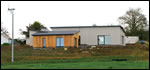
As interest in sustainable building continues to escalate, Construct Ireland is increasingly unearthing buildings that betray an ambition to break new ground under a plethora of green criteria. John Hearne visited one such house in County Louth, and found a project driven by passive house and BER scale-topping ambitions combined with on-site energy and water supply strategies and a commitment to the use of green materials

Ghost estates

Ghost Estates
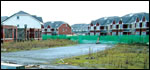
Due to the ill-considered productivity of the house building industry towards the tail end of the economic boom, Ireland is now saddled with hundreds of thousands of vacant homes in various states of completion. Structural engineer Sadhbh Ní Hógáin, currently writing her thesis for a masters architectural degree in advanced environmental and energy studies at the Centre for Alternative Technology, looks at the options Ireland has to address the problem.

Botched Finglas upgrade

Botched Finglas Upgrade
Ron and Collette Wardle started suffering ill health almost immediately after a sloppy energy upgrade. But reading a copy of Construct Ireland started a chain of events that led to the couple getting a brand new ventilation system — and seeing a marked improvement in their health.

Energise Clonakilty

An ambitious new community initiative aims to run Clonakilty on 100% renewable energy — and with similar projects sprouting up across Ireland and Europe, it offers one local example of how our Energise Ireland campaign can achieve its primary goal: weaning Ireland off fossil fuels and on to green energy.

Mixing It Up

Designing out carbon made easy
As Building Regulations tighten on carbon emissions, energy reduction and mandatory renewable energy targets, the task for designers becomes harder and harder. Bobby Gilbert of Bobby Gilbert and Associates explains how a new design tool is making sustainable design easier.

Passivhaus or passive solar house?

Passivhaus Or Passive Solar House
Few concepts in sustainable design have caught on like the passive house. Since the construction of the first passive house in Germany in 1990, an estimated 15 to 20,000 houses have been built to what is arguably the world’s leading low energy building standard. Drawing from his experience in sustainable building since the early 1980s, Bill Quigley of NuTech Renewables posits an alternative approach.