From the Construct Ireland archives


Welcome to the archive of Construct Ireland, the award-winning Irish green building magazine which spawned Passive House Plus. The feature articles in these archives span from 2003 to 2011, including case studies on hundreds of Irish sustainable buildings and dozens of investigative pieces on everything from green design and building methods, to the economic arguments for low energy construction. While these articles appeared in an Irish publication, the vast majority of the content is relevant to our new audience in the UK and further afield. That said, readers from some regions should take care when reading some of the design advice - lots of south facing glazing in New Zealand may not be the wisest choice, for instance. Dip in, and enjoy!

Village green

Plans for the first Irish eco-village have been in the works since 1999, but – finally – work is well underway at The Village in Cloughjordan, Co Tipperary. Following a site visit in December, Lenny Antonelli gives an overview of the innovative project’s renewable energy district heating system and sustainable planning and community design approach, before profiling four of the first houses to be built.
Passive aggressive

The emergence of the passive house in Ireland
Imagine moving into a house without a heating system – what would you do? Contact the developer and demand they put one in immediately? Call a solicitor and sue the builder? Or sit back and enjoy living in a house, designed to meet your expectations of comfort without any recourse to a space heating system. Jason Walsh met the people behind Ireland’s drive toward the passive house.

Does old mean cold?

Balancing conservation and energy conservation in historic buildings
Historic buildings are all too easy to ignore when considering potential candidates for energy upgrade work. The heritage value of an historic building can often mitigate against the most obvious interventions, such as adding some form of wall insulation or replacing windows. Architect Fergal McGirl takes a typical Georgian building in Dublin through the energy rating process and proposes some considered upgrade measures. 

Enerphit: the passive house approach to deep retrofit

While the principles of low energy building apply equally for new build and upgrades, the reality is that htting passive levels becomes much trickier when retrofitting. The Passive House Institute have taken this on board and created a retrofit standard that is ambitious but achievable.

Log House Renovation

Log House Renovation
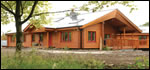
A log bungalow in rural Meath has been extended and given a total energy upgrade – and wood is at the heart of the renovation, with a timber frame extension and external insulation system along with a fresh log finish.
Words: Lenny Antonelli

Home and dry

0407-Home-and-Dry-SMALL.jpg
Homeowners thinking of applying for Home Energy Saving scheme grants should pay close attention to a renovation project in Stillorgan, south Dublin. The refurbishment boasts every upgrade measure grant-aided under the scheme, including three types of wall insulation, a high efficiency boiler and sophisticated heating controls. Lenny Antonelli visited the house to find out more.

Pre Form Precision

0305-preformprecisiontitle.jpg
The desire for better insulated, more environmentally friendly homes is driving ever more Irish self-builders to investigate alternatives to traditional block building. Jason Walsh visited a contemporary style factory-built timber frame house built in County Waterford in 2005.

Social Capital

Social Capital
Local authorities upgraded hundreds of houses last year under a €20m government scheme, and the Department of Environment has doubled funding for 2010. With local energy agencies playing a key role on the ground, the programme offers vital lessons for keeping quality high in energy retrofit schemes. Words: Lenny Antonelli

Stillorgan green upgrade

Stillorgan Camphill upgrade
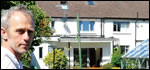
Four years ago the construction industry was focused on building big and fast — but at the same time, a small team was carefully and ecologically retrofitting a terraced Dublin house on a tight budget according to passive house principles.

Work of DART

0212schooltitle.jpg
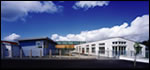
The groundbreaking Gaelscoil an Eiscir Riada, Tullamore, Co. Offaly was the first project to comprehensively draw from the Department of Education & Science’s DART (Design Awareness Research and Technology) programme, delivering a sustainable research project on school design.