Pass Judgement
Passive houses have long been considered the ultimate in low energy buildings. So when it comes to BERs, why don’t they always get a straight A? Lenny Antonelli investigates.

Passive houses have long been considered the ultimate in low energy buildings. So when it comes to BERs, why don’t they always get a straight A? Lenny Antonelli investigates.
In the hands of the right architect, meeting the passive house standard needn’t involve compromising on design. Construct Ireland visited a recently certified passive house which shows that a seamless low energy architecture is possible
While the principles of low energy building apply equally for new build and upgrades, the reality is that htting passive levels becomes much trickier when retrofitting. The Passive House Institute have taken this on board and created a retrofit standard that is ambitious but achievable.
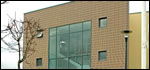
Beauty is only skin deep, or so goes the cliché, but is there more to 'grace' in a building than its exterior? Jason Walsh visited Rathnew, County Wicklow, to see how an ordinary office building was being transformed into a paragon of sustainability and spoke to two of the building's designers and occupants, architect Tomás Ó Leary and engineer Mark O'Brien
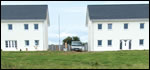
Lenny Antonelli visits a new residential development in rural Carlow that boasts only the second and third certified passive houses in Ireland, and encouragingly, finds that meeting and exceeding the coveted passive standard wasn’t as difficult as expected.
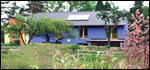
Built in 2004, Tomás O’Leary's house in Wicklow was the first in the country to be certified by the Passive House Institute — but how would it fare when subjected to a BER assessment six years later?
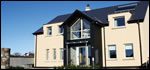
A new development at Grange Lough, Rosslare, reveals that passive houses can be made Irish – both in terms of what they’re built with, and how they look.
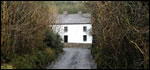
Turning a ruined farm house into a usable dwelling has been a dream for decades, but can an age-old structure really be brought-up to the cutting edge of energy efficiency? Architect Frank Cooney has found a way with a ruin in Cavan currently undergoing renovation. Jason Walsh visited the site to find out more.
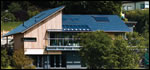
A striking new house in County Cork proves that meeting the passive house standard needn’t mean sacrificing good design
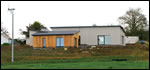
As interest in sustainable building continues to escalate, Construct Ireland is increasingly unearthing buildings that betray an ambition to break new ground under a plethora of green criteria. John Hearne visited one such house in County Louth, and found a project driven by passive house and BER scale-topping ambitions combined with on-site energy and water supply strategies and a commitment to the use of green materials
Unipipe are specialist distributors of heat pumps, underfloor heating and renewable low-energy heating systems.