

- Projects
- Posted
Price regulation promised to address district heating affordability
The Government has approved revisions to the general scheme of the Heat (Networks and Miscellaneous Provisions) Bill 2024, clearing the way for a regulatory framework intended to accelerate the rollout of district and communal heating in Ireland, with price regulation promised for all heat network customers.
Want immediate access to all back issues of Passive House Plus and exclusive extra content? Click here to subscribe for as little as €20, or click here to receive the next issue free of charge
The move comes as analysis by Passive House Plus indicates that the cost of communal heating can be in the region of three times higher than a heat pump.
Announcing cabinet approval on 10 July, minister for climate, energy and the environment Darragh O'Brien said the legislation "will provide the certainty needed to attract investment, accelerate the development of district heating projects across the country and ensure that consumers are protected through robust regulation".
The revisions formally designate the Commission for Regulation of Utilities (CRU) as heat network regulator. In response to queries from Passive House Plus, a department spokesperson said the CRU will have powers to intervene where providers fail to charge according to defined principles: charges must be "non-discriminatory, transparent, cost reflective, cost-efficient", and while they can allow for fair and reasonable returns, "they must take account of consumer impact and affordability".
The spokesperson confirmed that price regulation will apply to all heat network customers, not only those defined as vulnerable, and that it is envisaged the CRU's powers will cover both unit rates and standing charges.
Vulnerable customers, defined in the general scheme as household customers particularly vulnerable to disconnection for reasons of advanced age or physical, sensory, intellectual or mental health, will receive additional protections modelled on other energy sectors. These include a ban on winter disconnection for non-payment between 1 November and 31 March, and a minimum of 24 months to repay debts.
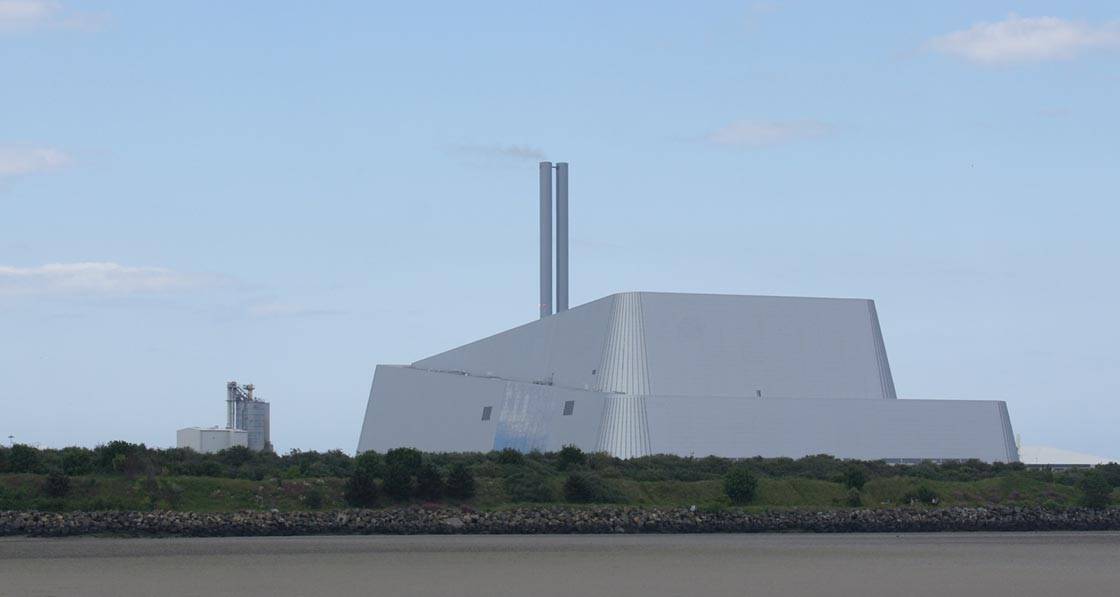
The bill sits alongside a growing funding pipeline. The Tallaght scheme, Ireland's first district heating network using recovered waste heat from a data centre, received €4.92 million from the Climate Action Fund, while €50 million has been allocated to the Dublin District Heating Project, which will use waste heat from the Poolbeg waste to energy plant. A further €50 to €100 million from the Infrastructure, Climate and Nature Fund has been allocated for construction grants of up to half of eligible costs, expected to run from 2027 to 2030 and administered through a new district heating centre of excellence at the SEAI.
But the department's answers also contained a significant concession on cost. Asked whether district and communal heating could struggle to compete with individual heat pumps on running costs, the spokesperson said: "The department accepts communal or district heating may not be the most cost-efficient heating solution in certain locations." The department noted "the importance of promoting the use of district heating without this resulting in less good value outcomes for customers", adding that the CRU, SEAI and department are working together to ensure the most cost-effective decarbonisation option is available to end users.
The question was informed by the experience of this magazine's editor, Jeff Colley, who is also the chair of the Heat Pump Association of Ireland. Colley's family of four lives in a communally heated, A3 rated 90 square metre apartment in Co Dublin. Metered data shows the household used 3,410 kWh of heat for space heating and hot water over the past 12 months – a remarkably low figure, translating to just 37.9 kWh/m2/yr, reflecting the fact that the low energy mid-block mid-floor apartment uses virtually no space heating. At the scheme's rates of 24.6c per kWh and a 93.07c daily standing charge, including VAT, that equates to an annual bill of €1,179. Heating the same home with direct electric heating at his current electricity rate would cost €1,210, while a heat pump with an unremarkable seasonal efficiency of 300 per cent would cost €403, falling below €260 on the cheapest smart tariff currently advertised, if run half on night rate. Communal standing charges do include plant maintenance costs that heat pump owners bear separately, but the gap remains stark.
While the bill does not create any powers to mandate consumers or developers to connect to district heating networks, it offers no specific mechanism to address the risk of locking in customers, who cannot switch supplier, beyond strengthened CRU powers to intervene "where it considers heat network prices to be unreasonably high".
The department noted "the importance of promoting the use of district heating without this resulting in less good value outcomes for customers".
The department said “Customers of communal heating systems will be protected from excessive prices by the power of the CRU to implement price controls, with licenced providers required to submit their tariffs and charges aligned with principles to ensure they are non-discriminatory, transparent, cost reflective and cost-efficient, allowing for fair and reasonable returns while taking account of consumer impact and affordability.
“The Commission will monitor the heat network market and step in where these principles are not being adhered to,” said the department. “For the purposes of monitoring compliance, the CRU may carry out comparative or benchmarking assessments of charges, costs or performance across Heat Networks or classes of heat networks, having regard to differences in scale, technology, location and customer characteristics.”
The department added that the bill allows for additional or more detailed pricing regulation to be introduced at a later stage if this proves necessary in light of sector development, and obliged the CRU to protect consumers from anti-competitive practices.
Existing heat suppliers will be required to register with the CRU while an enduring licensing system is developed.
Recent media coverage has pointed to problem district heating installations contributing to overheating issues. In July a legal action pursued by the owner of a €6.19m apartment at Lansdowne Place, Ballsbridge, went to mediation, over claims made by the homeowner, which the developers and engineers deny, that overheating had been caused by a failure to maintain or repair the district heating system.
Asked whether the department had analysed the overheating risk posed by constantly circulating high temperature heat through pipework in high density apartment buildings, the spokesperson did not say whether any analysis had been carried out, stating that installation issues "will be addressed by building regulations and the technical standards governing the district heating sector" as they evolve under the new regulatory regime.
Related items
-
 Kingspan fined €40 million by EU
 -
 Households feeling the heat of global oil conflict
 -
 New and enhanced Irish retrofit grants go live on 6 October
 -
 Glasgow scheme creates affordable rents fit for the future
 -
 Campaigners tell Irish government to publish Climate Action Plan
 -
 Central Bank: Irish housing completions set to fall as housing crisis continues