Opinion

Martin Murray, chairman of the Passive House Association of Ireland and founder of Martin Murray Architects, explains why the world’s leading energy efficiency standard is on the up in Ireland

Welcome to the archive of Construct Ireland, the award-winning Irish green building magazine which spawned Passive House Plus.
The feature articles in these archives span from 2003 to 2011, including case studies on hundreds of Irish sustainable buildings and dozens of investigative pieces on everything from green design and building methods, to the economic arguments for low energy construction.
While these articles appeared in an Irish publication, the vast majority of the content is relevant to our new audience in the UK and further afield. That said, readers from some regions should take care when reading some of the design advice - lots of south facing glazing in New Zealand may not be the wisest choice, for instance.
Dip in, and enjoy!
Martin Murray, chairman of the Passive House Association of Ireland and founder of Martin Murray Architects, explains why the world’s leading energy efficiency standard is on the up in Ireland
Inside the Lewis Glucksman Eco Gallery, with John Burgess of Arup Consulting
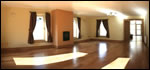
Closed-panel timber frame home in Wicklow with impressive thermal performance and airtightness

Achieving building regulations compliance and a good energy rating is one thing. Delivering a genuinely low energy building is quite another. A new scheme by one of Ireland’s most decorated developers may help show the market a way forward.

In a comparatively short time, district heating and cooling have emerged as an ideal sustainable solution for mixed use, residential, commercial and industrial developments. Far from being a new technology, district heating systems have been commonplace across Europe since the 1960s. Noel Walshe BE of district heating specialists Noel Walshe ltd explains what is required to deliver the most effective solution.

A new development in County Westmeath answers a nagging question about district heating: how to make it financially viable when it services energy efficient buildings. Lenny Antonelli visited a housing estate that combines low energy design with an innovative district heating system and ecological timber frame construction