
- Insight
- Posted
Embody language
With an increasing emphasis on the electrification of heat as the electricity grid decarbonises, interest in reducing the embodied carbon of buildings is growing. But does a focus on embodied carbon alone risk giving needlessly energy intensive ways of making buildings a free pass? In the first of a new series of articles, Dr Lois Hurst journeys into understanding embodied and life cycle impacts in construction.
The narrative is changing: When I first came to this industry in 2015, the forward thinkers, the thought leaders, were talking about Fabric First. Me, I was in the naïve first stages of my own radical building conversion, renovation and retrofit project. I had always aspired to build a low energy house, and now was my chance to do it.
But my experience as a consultant in waste management and environmental science taught me that we couldn’t look only at the operational impacts of the retrofit – these materials had a whole life cycle to keep in mind.
I duly undertook my CarbonLite Retrofit training, amongst the first cohort of students, and found a happy realisation that my “environmental science” was “building physics” under a different name. I understood the moisture risks for my 1890s solid stone former battery house – a pioneer of renewable energy in its own way. With some very much appreciated external expertise, I found I could put together a coherent retrofit scheme for this piece of locally relevant history. This would bring it into a new life as a comfortable family home.
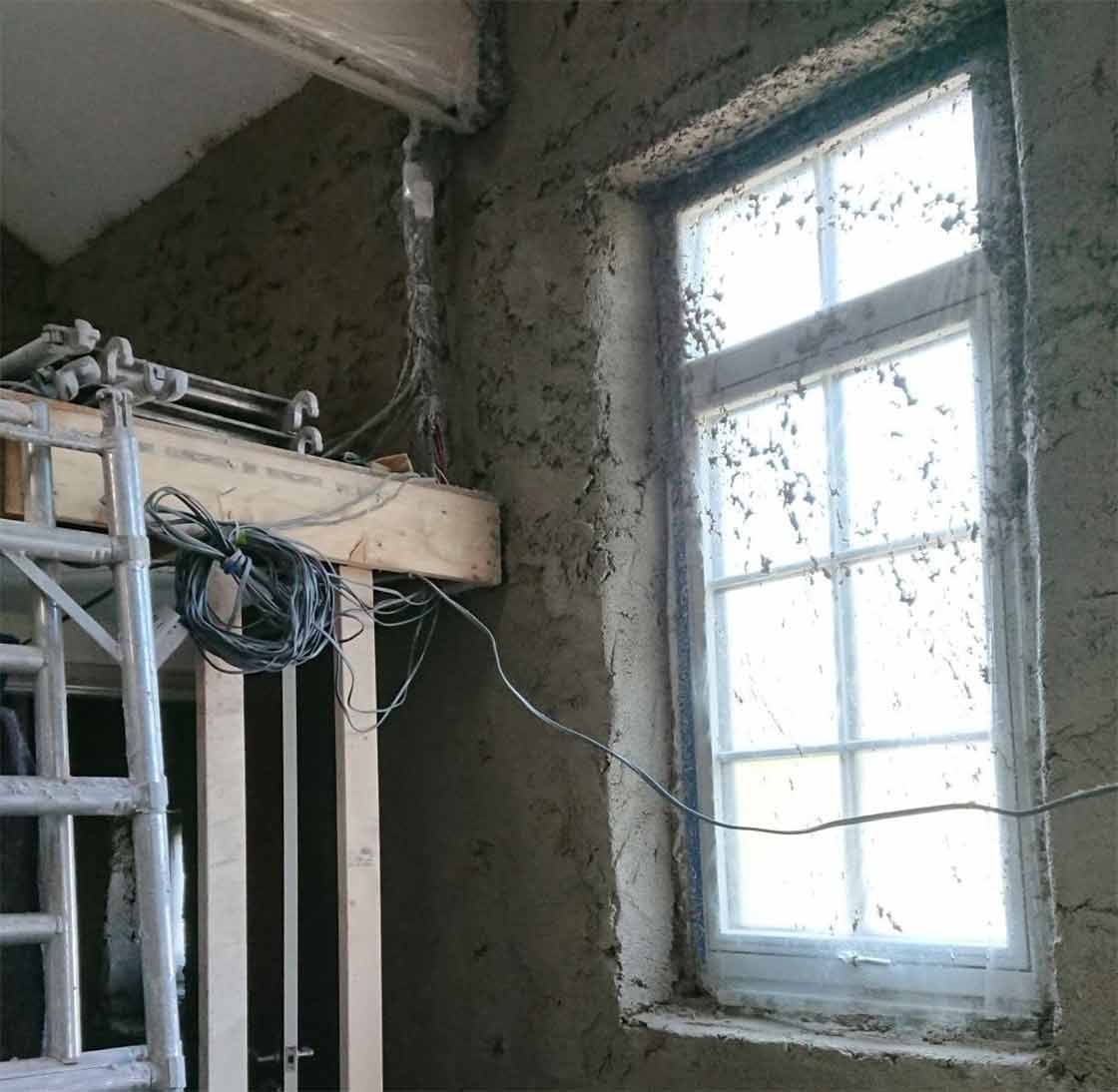
Hurst peeled the walls back to the brick, and installed a Diathonite insulating lime plaster, which combines airtightness and breathability.
This article was originally published in issue 50 of Passive House Plus magazine. Want immediate access to all back issues and exclusive extra content? Click here to subscribe for as little as €20, or click here to receive the next issue free of charge
But there was a nagging thought which I couldn’t throw off; will these energy savings pay off, when I look at the life cycle energy or carbon of the materials I’ll be pouring in, i.e. the embodied impacts?
And so, my PhD was born. I left my job – as you do, when you’ve already got too far along your self-build project to turn back. I found myself once again in the echoey corridors of academia – in fact a shaded basement office next to a draughty window and an overly hot radiator. I was singularly tasked with turning that nagging thought into a question about life cycle impacts of retrofits – and answering for all retrofits (isn’t it better to begin things from a position of ignorance, or we’d never begin anything?).
However, to my dismay, the more I learned about the current position of this research, and the more I learned about life cycle methods, the more I struggled to want to use them. In the academic literature, I read about layers of ambiguity and assumption, all leading to enormous scope for variation and uncertainty in results, and the further I travelled down this rabbit hole, the more I questioned the value of the approach altogether.
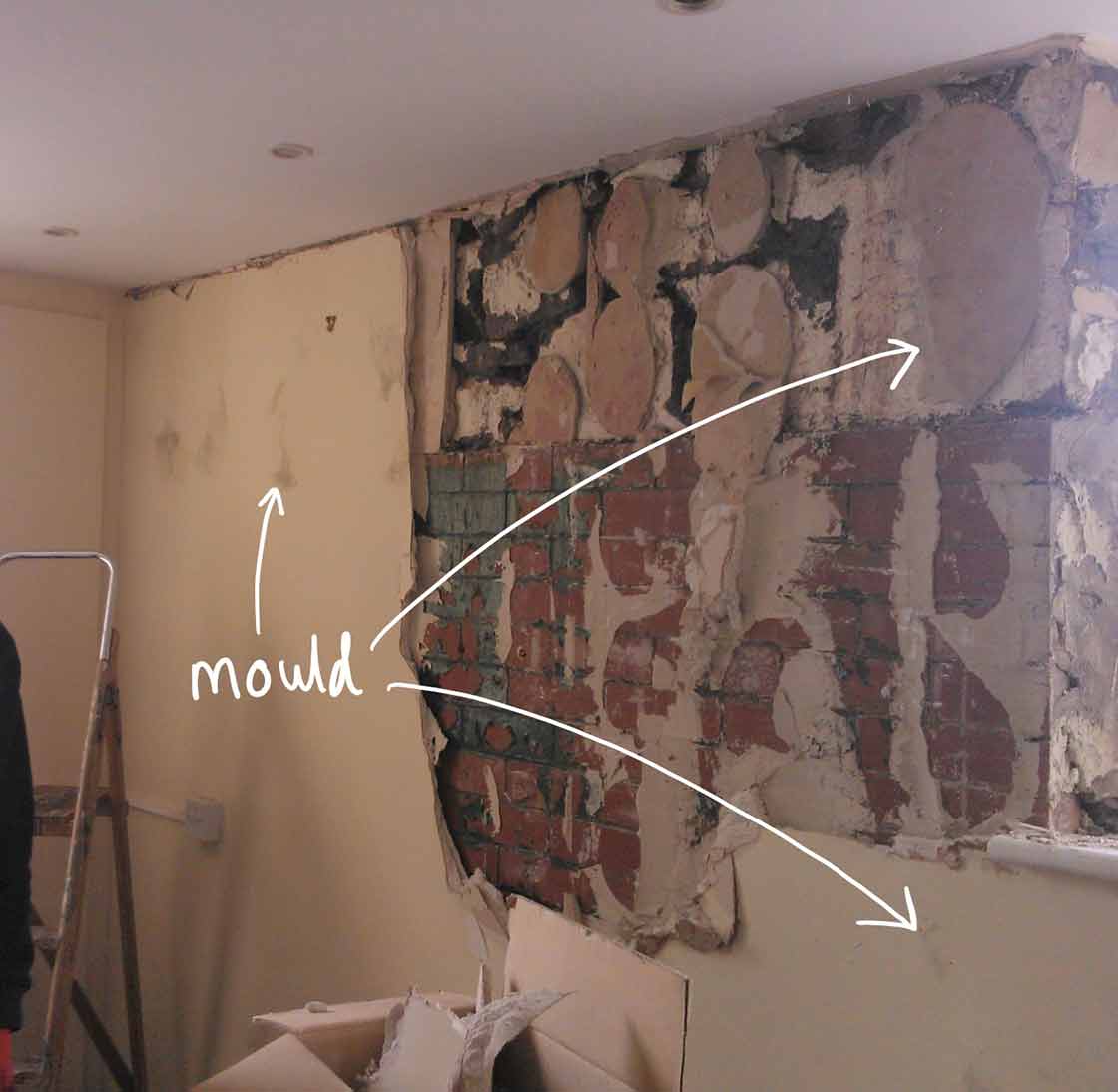
Hurst discovered interstitial mould behind existing dot and dab plasterboard on the external walls – an example of where poorly detailed fabric could ultimately cause a building to fall into disrepair, with an embodied carbon knock-on effect.
That said, there has to be value in life cycle thinking, and so I wasn’t intending to bin it all together. Drawing on my research and time spent on this, I do want to shine a light on some of the uncertainties, and some of the oversights, so that users in the construction sector have a better appreciation of the limitations in their analyses, and I do want to progress the development of improvements for the future.
This short series of articles serves to introduce some of the key areas which merit greater attention when looking at life cycle impacts of buildings. These will cover why and how variation occurs in life cycle studies and what the impact of this can be, both on building-level embodied impact calculations, but also on the data used to derive those; why retrofit embodied calculations need a slightly different approach to those for new buildings; the challenges around obtaining data for retrofit embodied calculations; proposed alternative approaches for retrofit LCA; and presentation and contextualisation of some of my retrofit life cycle data.
However, in this instalment, I would like to draw your attention to a quiet assumption which seems to have permeated, unchallenged, into all the embodied impact conversations; embodied carbon is more important than embodied energy.
But first, let’s begin with a quick 101 on life cycle analysis. Life cycle impacts are made up of operating impacts, i.e. those which occur during the building’s operating, or use phase, and embodied impacts, i.e. those occurring during raw material extraction, product manufacture, associated transport, end-of-life processing etc.
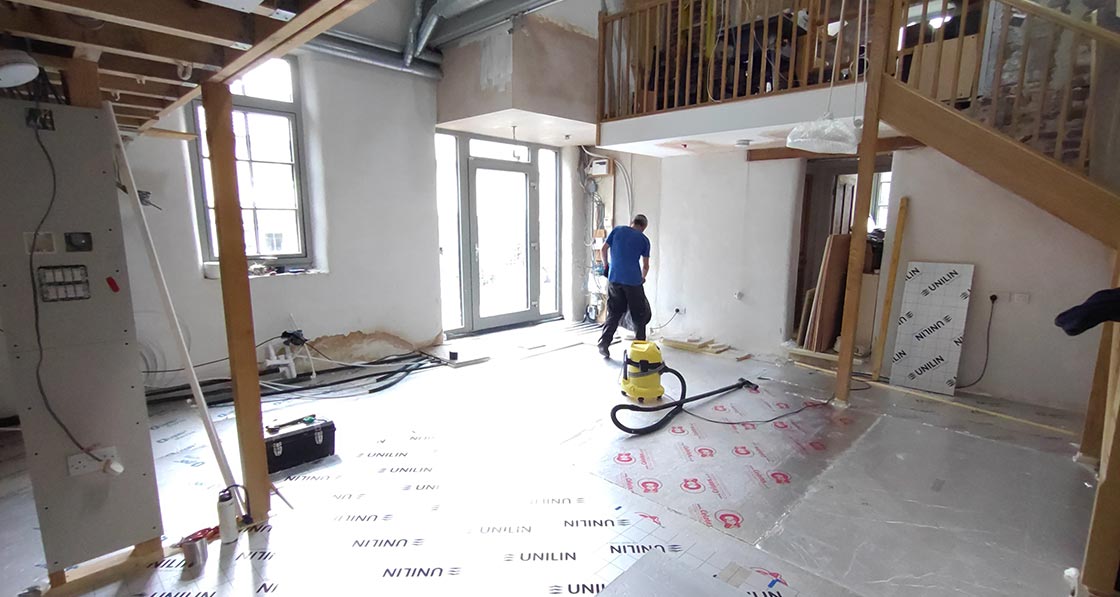
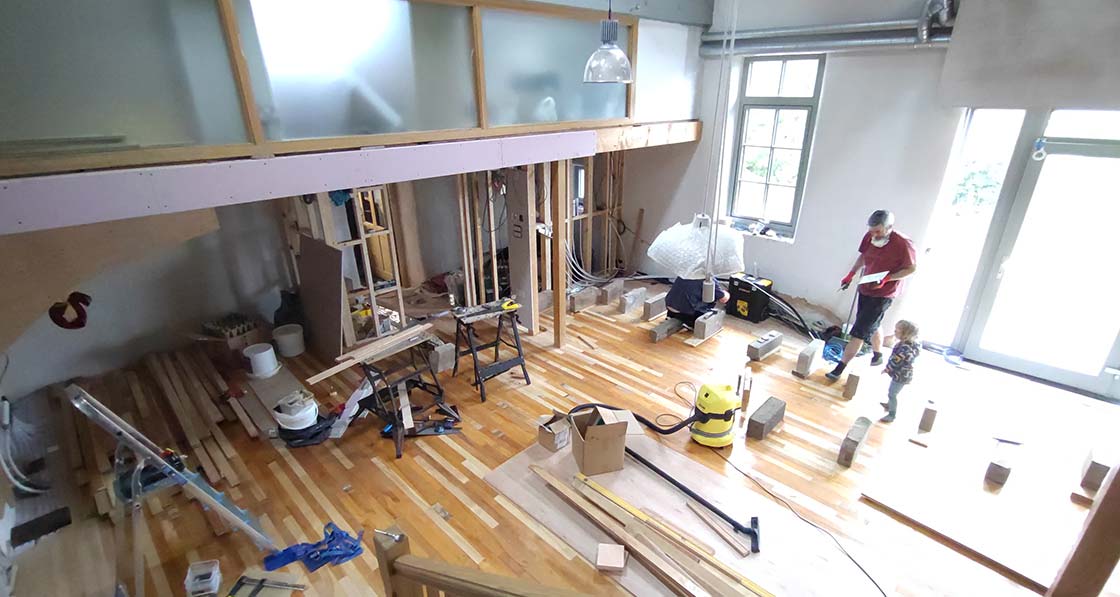
Floor insulation including some Unilin and salvaged (fly-tipped) Celotex rigid insulation used for a floating floor, and Phonotherm load-bearing pads beneath the stud walls and staircase.
This can be summarised as operating impacts + embodied impacts = life cycle impacts. Life cycle studies are undertaken by developing an inventory of all the materials which will be or have been used, and attributing an impact factor (carbon or energy or other metric such as economic cost, ozone depletion potential etc.) obtained from a data source, such as an environmental product declaration (EPD), a database (free or subscription), or direct from a manufacturer.
These impact factors are then summed together to determine the embodied impacts. Operating impacts are derived from building energy models, or measured data, and then (normally) converted into carbon data. This way we then have estimates of operating and embodied impacts, and thus life cycle impacts, and this can help us make better decisions in designing and constructing that building.
However, getting back to my bugbear, I would like to question the apparent premise that embodied carbon is more important than embodied energy. Embodied carbon has really overshadowed embodied energy in recent years. Whilst the two metrics are commonly used almost interchangeably, there is a distinction in both meaning and usefulness. Embodied carbon usually refers to emissions of carbon dioxide and other greenhouse gases, and so of course better represents climate change impacts. It is reported as a mass of CO2e which stands for carbon dioxide equivalent, meaning that all greenhouse gases emitted are converted into the equivalent mass of CO2.
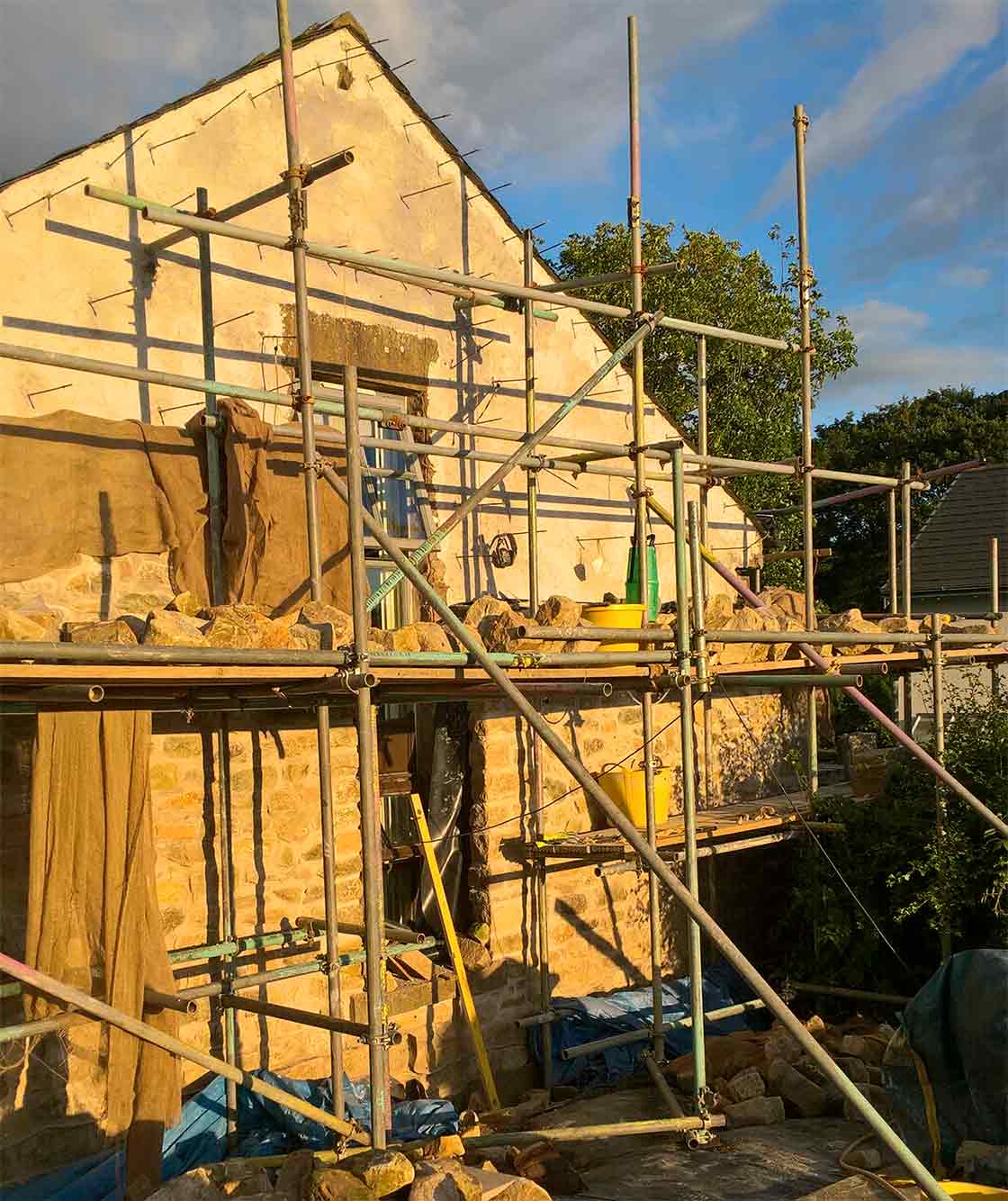
The exterior gable of Hurst’s home with a new stone skin going up to form a wide cavity for fullfill insulation, including thermally-broken Teplo-L ties and lime-plaster parge coat over the original stone, with hessian sheeting protecting fresh lime mortar.
Embodied energy on the other hand, refers to the energy consumed, usually as primary energy. This includes energy at source, meaning that in the case of electricity, generation and distribution losses are counted. Reported in joules or kilowatt hours (kWh), embodied energy arguably doesn’t represent climate change impacts at all, because we know that energy is generated by a number of different technologies with different carbon factors.
Nevertheless, reporting embodied energy – and life cycle energy, which also takes account of the energy use arising from the building’s use phase – certainly has an important function.
The main risk with considering only life cycle carbon arises when analysis of a new-build or retrofit is undertaken using wholly (or substantially) decarbonised power and heat. In this circumstance, operational energy performance becomes effectively entirely inconsequential. Perversely, there could be perceived tangible advantages to minimising the quantity of materials being used (i.e. limiting fabric performance) as the principal way of reducing embodied, and thus life cycle carbon.
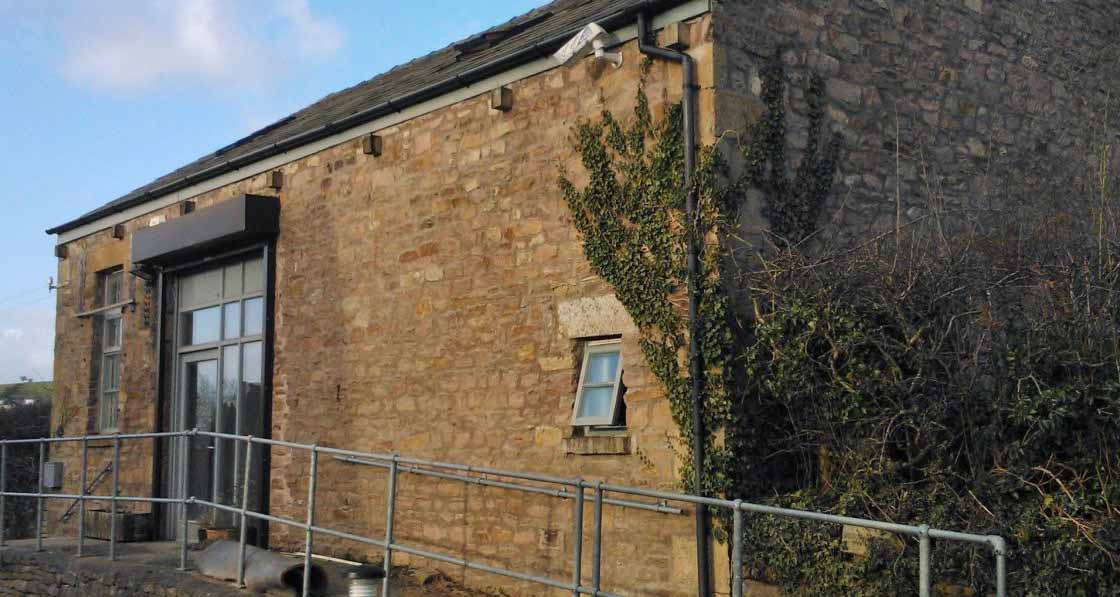

Hurst’s reflections on the life cycle balance between grid and buildings is manifest in her own home, a former battery house from the 1890s which Hurst renovated, which was originally built to support a nearby hydro electric scheme.
There are a multitude of impacts arising from this. In terms of occupants, this approach offers nothing in the way of reduced running costs, improvements to comfort, or health. It risks contributing very little to protecting or increasing the value of the property.
However, the primary risk to the climate is that this facilitates indiscriminate (or at least poorly considered) use of energy, with broader implications for the scale of renewable energy infrastructure. Readers of Passive House Plus will likely already be sold on the advantages of reducing operating energy use in our buildings. You will also recognise that when operational energy efficiency measures are implemented in a building as well as decarbonisation, a smaller amount of renewable energy is then required by that building, meaning less renewable energy needs to be generated.
This exact thinking should apply to the supply chain, and hence the embodied impacts too. A smaller embodied energy footprint means the demand for energy (renewable or otherwise) is smaller, and the consequential pressures or demands on decarbonising power and heat can be smaller too. This can only be realised when life cycle energy is considered alongside life cycle carbon.
The natural extension of this argument turns to the embodied impacts of decarbonising the power grid and heat sources, and perhaps even the question of whether it is better to build low-energy buildings, retrofit existing ones, and improve manufacturing efficiencies, or build larger decarbonised heat and power sources. In the language of life cycles, this is a question of boundaries, and this extends the boundaries much wider than the building being designed.
In this way, it is then possible to see that embodied impacts occur relating to the development of a decarbonised power grid and heat sources, and of course in improving the efficiencies of manufacturing processes. I frame this as the question “where do we want our embodied impacts to occur?”.
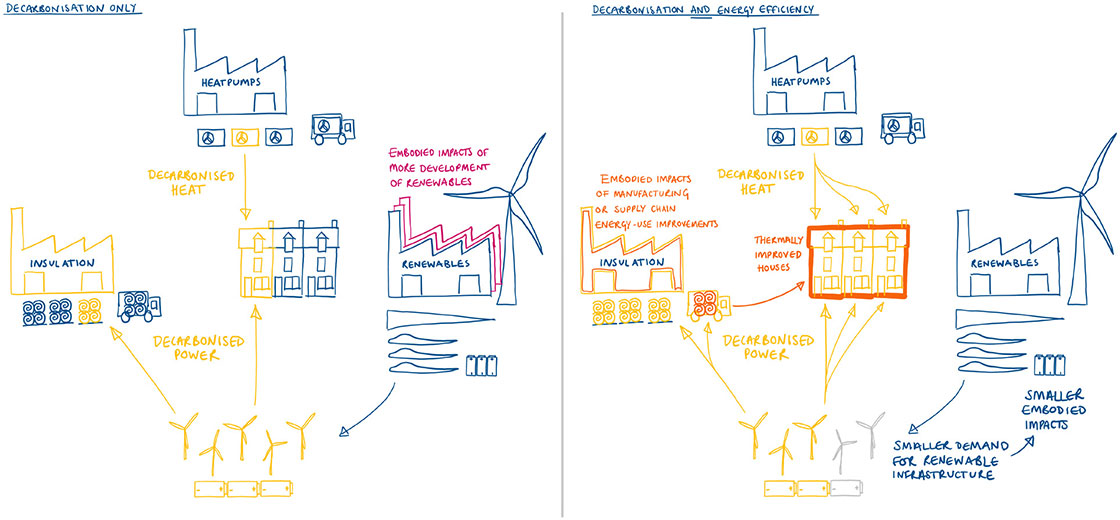
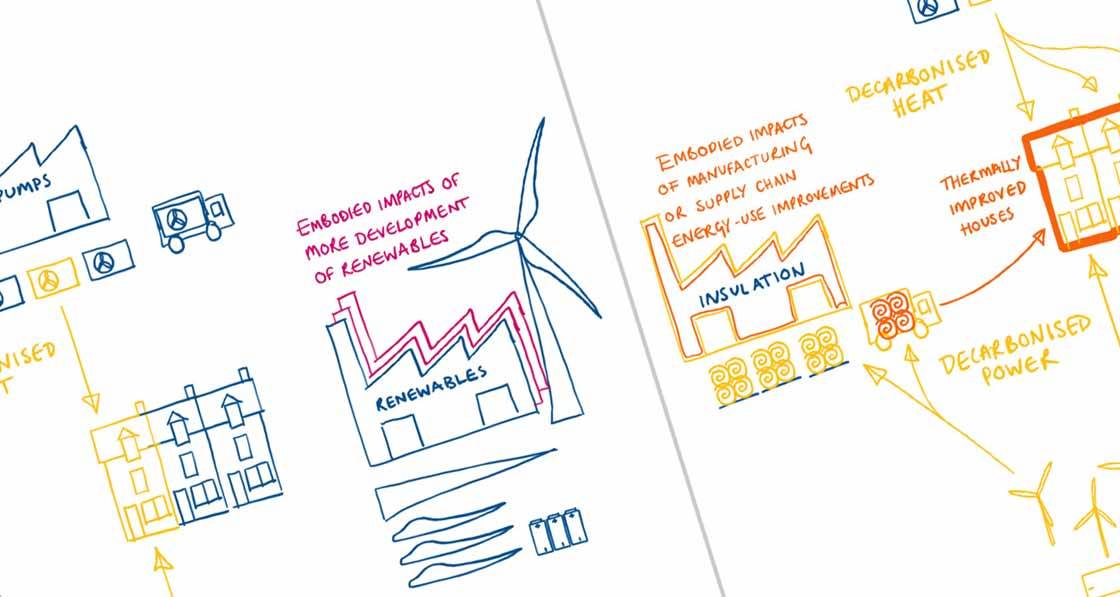
FIGURE 1. A schematic illustration from Hurst’s thesis showing a scenario of decarbonised heat and power (yellow) on the left, versus decarbonised heat and power with energy efficiency measures (orange) on the right. In both scenarios, decarbonised power is supplied to a facility making retrofit products. Decarbonised heat equipment is manufactured at a facility supplying the domestic market. Renewable energy infrastructure is manufactured at a third facility. Embodied impacts occur in different places in each scenario.
As figure 1 illustrates, whether we are making products for new buildings, for improving the fabric performance of existing buildings, or for renewable energy generation, these processes all have embodied impacts. If we consider retrofitting homes versus decarbonisation via developing extra renewable energy capacity (i.e. wind turbines, solar PV, hydro, battery storage etc) and heat pumps, how effectively we can deliver the former, could have a substantive impact on the need for the latter.
If we look at material types, retrofits consume predominantly lightweight insulation and membranes etc (glazing upgrades being the major exception).
Meanwhile, decarbonised power and heat consumes steel, rare earth elements, concrete, refrigerants etc. In terms of the location of those impacts, retrofit impacts occur at manufacturing facilities, and then in homes (by virtue, the built environment); renewable energy installations on the other hand will commonly be occurring in the natural (or at least un-built) environment.
The consideration given to this trade-off seems to be almost non-existent, and yet the consequences of neglecting it could be considerable; the worst-case scenario is that extensive decarbonised heat and power infrastructure is developed, at substantial carbon cost, whilst later, driven perhaps by comfort demands, or continued high energy costs, the fabric retrofits are implemented anyway, with further carbon costs, leading to redundancy in the decarbonised heat and power infrastructure. This would be the national- scale equivalent of sizing your heat pump for your home’s heating demand before you did your retrofit.
Reclaimed floorboard.
Relying solely or substantially on decarbonisation of heat and power to address life cycle carbon, either through negating the need to achieve high performance building fabric, or through delivering lower embodied carbon materials into the construction sector, externalises impacts by necessitating more development of renewable energy infrastructure.
Conversely, reporting life cycle energy – alongside, not instead of embodied carbon – would make it possible to evaluate whether reducing operating energy use by improving building fabric, with those fabric improvements implemented using low embodied energy and carbon materials, yields an overall more effective reduction in carbon than by focusing on grid decarbonisation. At present, without measuring embodied and life cycle energy, we are lacking some of the elements of the equation.
The solution here is to ensure that we are talking about, measuring, reporting, benchmarking and target-setting for life cycle energy and embodied energy, alongside carbon. Life cycle energy reveals the nuance in choosing products; embodied energy reporting shows us which manufacturers are most effective, whilst reporting life cycle energy ensures that we are in a position to quantify the energy impacts of construction, and thus meaningfully consider the benefit that has on the wider carbon and energy landscape. When you next commission a life cycle carbon study, make sure you’re asking for the life cycle energy too.